
Series 4 of 10 · Litigation Architect
Filing and service
Getting papers into the record and to parties
eFileTexas, service of process, certificates of service, filing fees, standing orders, and the mechanics of civil filing for pro se parties.
Filing path
Progressive path: quick Q&A → deeper help → structured learning.
Questions in this series
Read in order for a progressive path, or jump to the question that matches your situation.
- How do I file documents with the court?
Most Texas courts require electronic filing through an approved e-filing provider linked to eFileTexas, though some justice courts still accept paper … General legal information for self-represented litigants—not legal advice.
- What is eFileTexas?
eFileTexas is the statewide electronic filing manager through which litigants and attorneys submit documents to participating Texas courts via approve… General legal information for self-represented litigants—not legal advice.
- What is service of process?
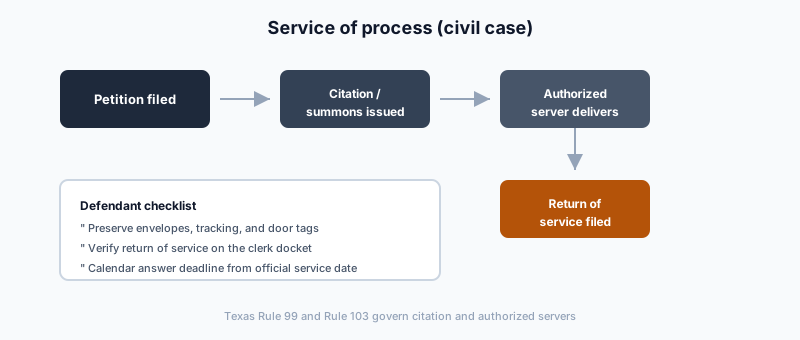
Service of process is the formal delivery of legal papers that gives a defendant notice and an opportunity to respond, governed by Texas Rule 99 and r… General legal information for self-represented litigants—not legal advice.
- Who can serve legal papers in Texas?
Citation is generally served by a sheriff, constable, or other person authorized by Texas Rule 103—not by a party interested in the outcome.… General legal information for self-represented litigants—not legal advice.
- What is a certificate of service?
A certificate of service is a statement on a filed document showing who received copies, how, and when—required for most papers after initial citation… General legal information for self-represented litigants—not legal advice.
- How do I serve the other party after filing?
After citation, most subsequent papers are served on opposing counsel or pro se parties by mail, electronic service, or hand delivery as rules and agr… General legal information for self-represented litigants—not legal advice.
- What is substituted service?
Substituted service allows citation to be served in specified alternative ways when personal service fails after diligent attempts, under Texas Rule 1… General legal information for self-represented litigants—not legal advice.
- What is citation by publication?
Citation by publication is a last-resort service method requiring court authorization and newspaper publication when a defendant cannot be located aft… General legal information for self-represented litigants—not legal advice.
- What filing fees should I expect?
Fees depend on court type, case category, and requested relief. Clerks publish schedules; e-filing providers may add convenience charges.… General legal information for self-represented litigants—not legal advice.
- What is a standing order?
A standing order is a pre-existing court order that applies automatically when a case is filed, often governing discovery, communication, and scheduli… General legal information for self-represented litigants—not legal advice.
This Litigation Architect Q&A series provides general legal information for self-represented litigants. It is not legal advice, does not create an attorney-client relationship, and does not guarantee outcomes. Verify all deadlines, rules, and local requirements on your official court docket and with qualified counsel when needed.